Author Archives: mollyblieden3947

Little Fires Everywhere by Celeste Ng

Little Fires Everywhere is an emotionally packed novel. There is rich material in the story and as I was thinking through my experience reading it I wondered what my daughter would experience if she were to read it too. It has a little something for everyone – rebellious teens, inter-racial relations, town planning, abortion, immigrant experience, surrogate pregnancy, infertility…the list goes on.

To me, this is really a book about motherhood, in all its shapes and sizes. There are good mothers, surrogate mothers, accidental mothers, neglectful mothers, single mothers, adoptive mothers, mothers from other cultures, and absent mothers. The two primary mothers – Mrs. Richardson and Mia Warren – provide the narrative arc of the book. Mrs. Richardson grew up in Shaker Heights, and internalized the structured planned community in which she was raised. She met her husband in college, they planned out their careers, house and family, and then worked to achieve their goals; hardworking but using conventional means. Mia on the other hand was an artist who used photography in her idiosyncratic body of work. She followed her intuition and was very attentive to the world around her, both in her art and her life. Her life was itinerant, she and her daughter never stayed in one place very long. As an artist who studied photography there were aspects of Mia’s character I identified with, but if I’m honest with myself I also identified with the rule-following Mrs. Richardson who embraced rules and routine.

Mia, I found myself thinking, is the mother I always want to be; saying the right things to the children in their times of need, being open and accepting, and creating a feeling of home through one’s presence rather than the choice of decor. Mrs. Richardson, on the other hand, is the mother I fear I might be – so absorbed in her work, and the need for structure and rules, that she is missing the emotional register of her family entirely. Of course neither of these characters are perfect, and as a reader and mother I know that good parenting requires both a little bit of Mia and a little Mrs. Richardson.

I haven’t been rating my books, but if I did, out of 5 šŸ‘, I would give this one a šŸ‘šŸ‘šŸ‘šŸ‘šŸ‘. It is a totally absorbing read, the characters are complex and do unexpected things. As noted it really has something for everyone and in fact I do plan to give this to my daughter, as I’m very curious to hear her response.

Chicken and Fennel Ragu by Kim Severson

I was looking forward to making this dish all week. I was a little nervous about it because of all the comments from NYT Cooking readers who complained of the sauce being too watery and the dish too salty. The recipe omits measurements in some key steps so I’m going to reproduce it below with my measurements and modifications. One note is that this is a fairly labor intensive recipe which produces only enough for one meal. You might want to consider doubling the recipe because the dish could have a great afterlife in a meat pie or over rice or just on its own!

Cut 6 slices of bacon in thin strips and brown over medium high heat until crispy.

Remove from pan with a slotted spoon and put in 2 lbs of bone-in chicken thighs, skin down. Brown over medium heat then turn and brown the other side, about 3-4 mins each side.

Remove the chicken and all but 3 Tbsp oil from the pan.

Add 2 cups chopped fennel and 1 chopped medium onion and cook until the vegetables soften and start to turn golden. Add 6 sprigs of fresh thyme and cook 1 more minute. Sprinkle in 1 Tbsp all purpose flower and stir well to integrate.

Pour in 1/2 cup white wine and simmer 2-3 minutes. Add the bacon and chicken back to the pan and pour in 1 cup of water. Partially cover and simmer about 45 minutes.

Remover the chicken to a plate to cool and take off the lid, allowing the sauce to reduce another 5 minutes. Meanwhile remover the skin and bones from the chicken and shred.

Add 1/3 cup half and half to the broth and reduce another 2 minutes. Add back the shredded chicken and season with salt and pepper. Stir in 2 Tbsp butter, 1/4 cup grated Parmesan, and 2 Tbsp chopped parsley.

Serve over pasta or rice. Enjoy!

Fluffy Cheddar Biscuits by Erin Jeanne McDowell

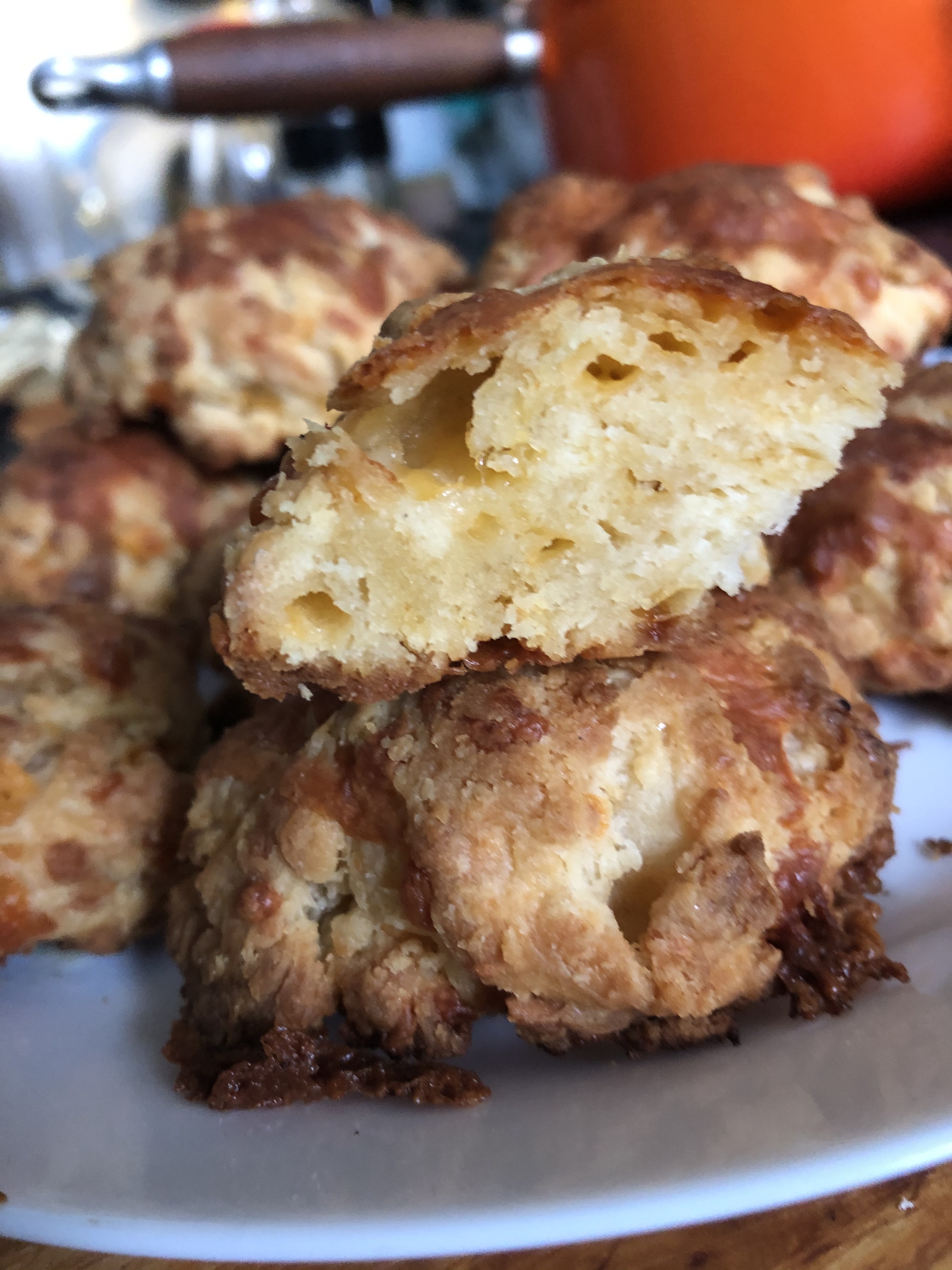
I’ve never made biscuits before and don’t have a pastry cutter, but these were delicious- I would definitely make them again. I made a few adjustments based on comments from other readers:

In a large bowl mix:

3 cups all purpose flour

1 Tbsp sugar (not 3)

1 Tbsp baking powder

1 large clove of garlic minced (instead of garlic powder)

1 Tsp salt

1/4 Tsp paprika (Hungarian sweet)

Add:

1/2 cup of cold butter cut in small pieces.

I used my hands to fully coat and make sure the butter was divided in pea-sized pieces

Add 1 1/2 cups graded sharp cheddar to mixture and stir with wooden spoon.

Wish 1 cup buttermilk (I used half and half) and 1 large egg. Make a well in the center of the bowl and pour in milk/egg mixture. Stir in with a wooden spoon – do not use your hands.

Preheat oven to 375 and put racks on top and bottom third of oven.

Spoon dough on parchment-lined baking sheets. Brush tops with

Melted butter, then put more grated cheese on top of each biscuit.

Bake for 15 minutes, remove and brush again with melted butter, then rotate pans between the oven racks and cook another 5 minutes.

Brush one more time with butter, then let cool before eating.

The Testaments, by Margaret Atwood

The Testaments is a cringey book that you can’t put down. The long awaited sequel to The Handmaid’s Tale, The Testaments takes place in a not-too-distant future America, where the zealots have overthrown the US government and set up a religious totalitarian state. America, now Gilead, is a place where gender roles are strictly defined, and the men in power get to write all the definitions. Women are confined to their “rightful” place of home and family, no longer taught to read or allowed to have positions of responsibility, other than having children and maintaining their households.

Where Handmaid’s Tale focused on the horrors of the Handmaids, who served as sex slaves and wombs to the ruling Commanders, in The Testaments, the Handmaids are in the background. The peripheral characters of the first book (children, wives, maids “Marthas” and the nun-like “Aunts”) are the players here. The book weaves together the stories of three women; Daisy, an outsider from Canada; Agnes, of the first generation to be raised in Gilead; and the older Aunt Lydia who lived through the violent formation of Gilead to become one of the most powerful women in the new regime. Without spoiling the story I will just say that Atwood cleverly weaves together these women’s lives and the future of Gilead.

When I read the Handmaid’s Tale many years ago, during the Reagan/Bush era, the nascent anti-choice movement was emerging and the vision was frighteningly real. The Testaments emerges in the age of Trump and is equally dread-inducing. There is a very Trump-like Commander Judd, who kills off his young wives and collects child pornography, while torturing women for their improprieties. In passing we learn of Judd’s “National Homelands” campaign to promote whiteness. The various Commander’s wives, in the absence of meaningful work or education (only Aunts are taught to read) vie for power in the home, over the petty details of domestic life.

Agnes is the one pure character in the book, as she knows not of life beyond Gilead, cannot read, and rarely leaves home, other than to attend the sanctioned religious school for girls. Her transformation and bravery are a challenge to the reader. In the face of overwhelming opposition, will you stand up for what is right? Put your body on the line to help others? The Testaments is both a warning and a call for action that is hard to ignore.

The Islanders, by Meg Mitchell Moore

The Islanders is a great summer read, even in October. The narrative structure follows three unconnected characters – Joy, Anthony, and Lu – who are all on Block Island prior to a major storm that we learn in the prologue has left two people dead. Gradually these characters’ lives come together. It is a narrative structure that I always enjoy, even if it is predictable.

Food and writing, and writing about food, are major players in this book. As an amateur blogger and foodie, I couldn’t help but enjoy the narrative of Lu, the food blogger who is constantly thinking of new recipes and food themes for her blog.

All three characters struggle with parenting; one as a single mom, one as a dad separating from his wife, and one as a stay at home mom who wants out of the home. The struggles of the women characters are classic; the feminist subtext is a little heavy handed (Virginia Woolf’s A Room of One’s Own figures prominently Lu’s transformation). But I can’t really complain about a book being too feminist.

The book has some quirky characters. The highlight for me was 13 year old Maggie, who has a collection of T-shirts with corny sayings (one has a periodic table and says “I wear this shirt periodically” another “cute but psycho”).

But when it comes right down to it the book is just a fun read with a good narrative arc and a happy ending. And we all need a little pleasure in the text sometimes. Even when it’s no longer summer.

Sausage, Collard Green and White Bean Stew, by Molly Blieden

  • This is an original recipe made with odds and ends in the fridge and cupboard that I threw together last night. It was a huge hit and super easy to make so I thought I’d share.
  • INGREDIENTS
  • 1 yellow onion sliced
  • 2-3 cloves of garlic minced
  • Large bunch of greens (I used collards) sliced
  • 1 pound pork sausage
  • 1 15 oz can diced tomatoes
  • 1 15 oz can canelloni beans
  • Salt and pepper to taste

Heat a skillet over medium high and brown your sausage. Slice in half inch slices and cook the slices another 2 minutes then set aside. In the oil from the sausage cook the onion until soft and translucent, about 5 minutes. Add the collard greens and put a lid on the pan for 2-3 minutes until the greens start to wilt. Add the garlic and a teaspoon of salt (to taste) and cook another 3-4 minutes until the greens have all wilted but are not quite fully cooked.

Strain the beans and diced tomatoes and add to the pan with the sliced sausage. Turn down the heat, cover, and simmer for 5-10 minutes. (I’m a fan of crunchy greens but if you like things soft you may need to simmer longer. Be sure to taste as you cook- it’s the only real way to see if things are done!)

Serve over rice. Enjoy!

Spiced Seared Eggplant With Pearl Couscous, by Julia Moskin

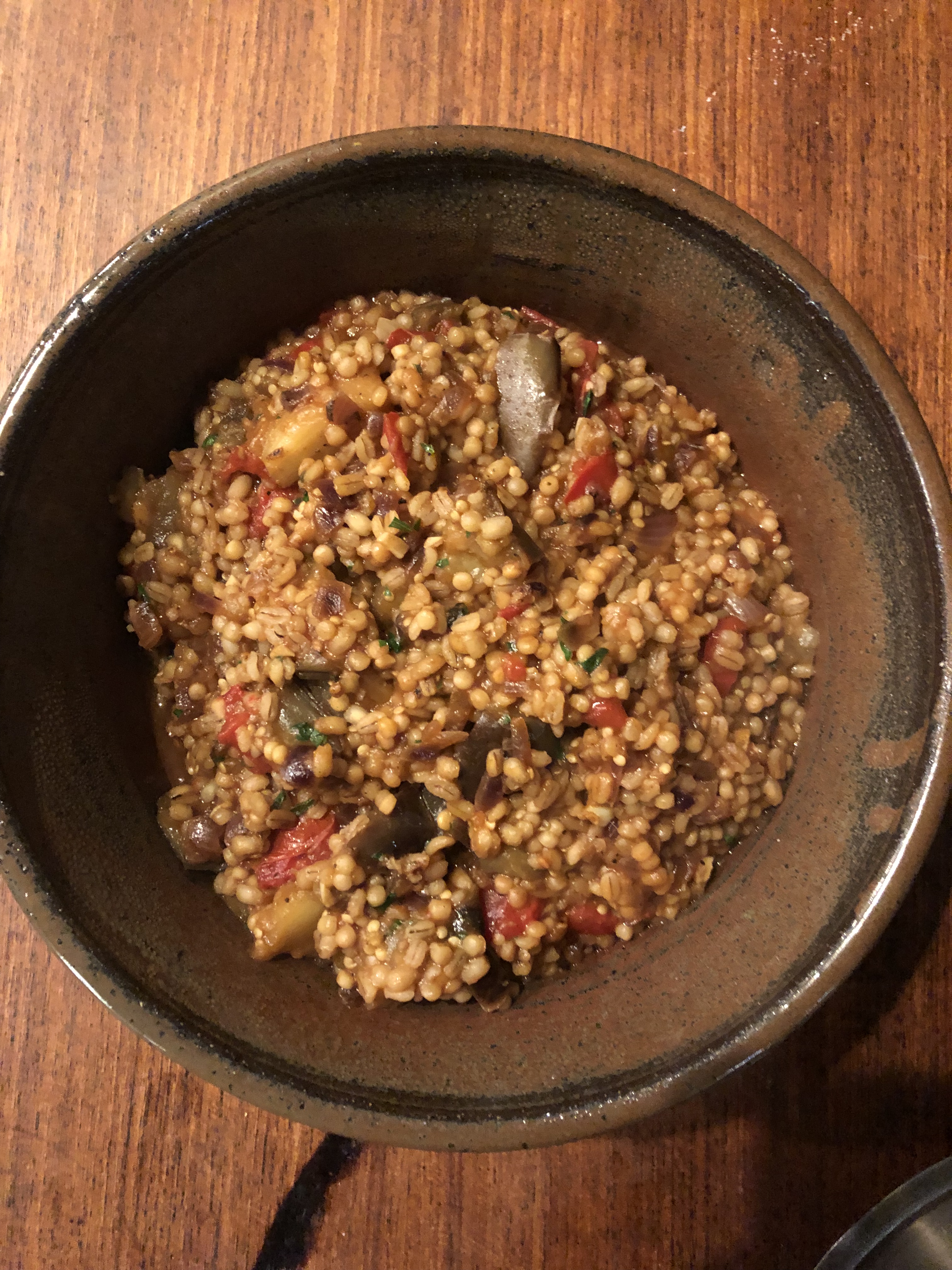
The success of this dish depends I think on the sweetness of your eggplant. The one I used was not that sweet and if I make this again (which I probably will) I’d use Chinese Eggplants. Like many of the others who commented on the NYT Cooking app I would double the amount of eggplant from 2 cups to 4. Basically use an average size eggplant. I also didn’t have quite enough Israeli couscous so I used a mix of barley and couscous. This was a little bit of a pain because they have separate cooking times so I cooked the barley separately for 20 minutes then added it to the dish at the end with the couscous to cook another 10 minutes. But the barley was a great addition to the dish- I would definitely use it again. Finally like everyone said it is definitely better if served with yoghurt! Enjoy!

Song of Solomon by Toni Morrison

Song of Solomon dwells in the less discussed crannies of African American history – middle class black experience in the 1930s-50’s in the Midwest. Against this backdrop we are witness to a coming of age story in which the central character, Milkman, journeys to the south to seek the history of his family and his name, Macon Dead.

As we discussed in my book group, naming (and being able to accept, reject, know the history of, or pass on one’s name) is a central theme in the novel. Milkman’s grandfather, Macon Dead, was given his name by a drunk Yankee soldier. His grandfather picked his daughter’s name from the Bible, copying the letters “PILATE” although he couldn’t read on a piece of paper. Pilate has her naming paper made into an earring which she carries around with her the rest of her life. The poetry of biblical names, nick names, names imposed by others and names chosen for one’s self, form a central poem throughout the book.

Milkman, in the first half of the book, is presented as self-centered and un-self-examined. He does not identify as “other”, gets bored when his friends attend talking about the murder of Emmet Till, surprised the police would stop him when he was not speeding or otherwise breaking the law. He is insensitive to race and class difference.

But as he learns more about the story behind his own name, he gradually awakes to the stories of his family and friends, and sets off to the south in search of gold, and in the absense of gold, truth.

Toni Morrison is a brilliant storyteller and I feel inadequate at describing the narrative rhythms through which children’s songs, flying men, ghosts, and bags of bones come to life and gain meaning through her prose. It is a book both instructive and pleasurable, which must be read.

What Alice Forgot by Liane Moriarty

I read this book in 24 hours and couldn’t put it down. I have a full time job so this feat involved a few long escapes to the bathroom when I couldn’t put it down.

Alice hits her head and wakes up on the floor of the gym thinking it’s 1998 instead of 2008. All her memories of the past 10 years are gone- last she remembers she is pregnant with her first child, Bill Clinton’s sex scandal was in the news, and she is happily married to Nick. So it is a shock to learn she now is the mother of 3 and she and Nick are in the process of separating.

She has no recollection of her other children being born, doesn’t recognize her new circle of friends, her problems with Nick, or her new boyfriend.

Alice’s temporary amnesia takes her outside of her “busy busy busy” life and relaxes the social expectations of those around her, allowing her to see things in a new way and change her behavior. It is perhaps this extreme ability to step outside her life that makes the story so appealing. As the book proceeds we cheer on the old Alice of 1998, not wanting 2008 tiger mom Alice to return.

I’m not going to spoil the ending but will say it is a gratifyingly happy one. A fitting end to a very pleasurable read.

Pesto Fried Chicken by Dawn Perry

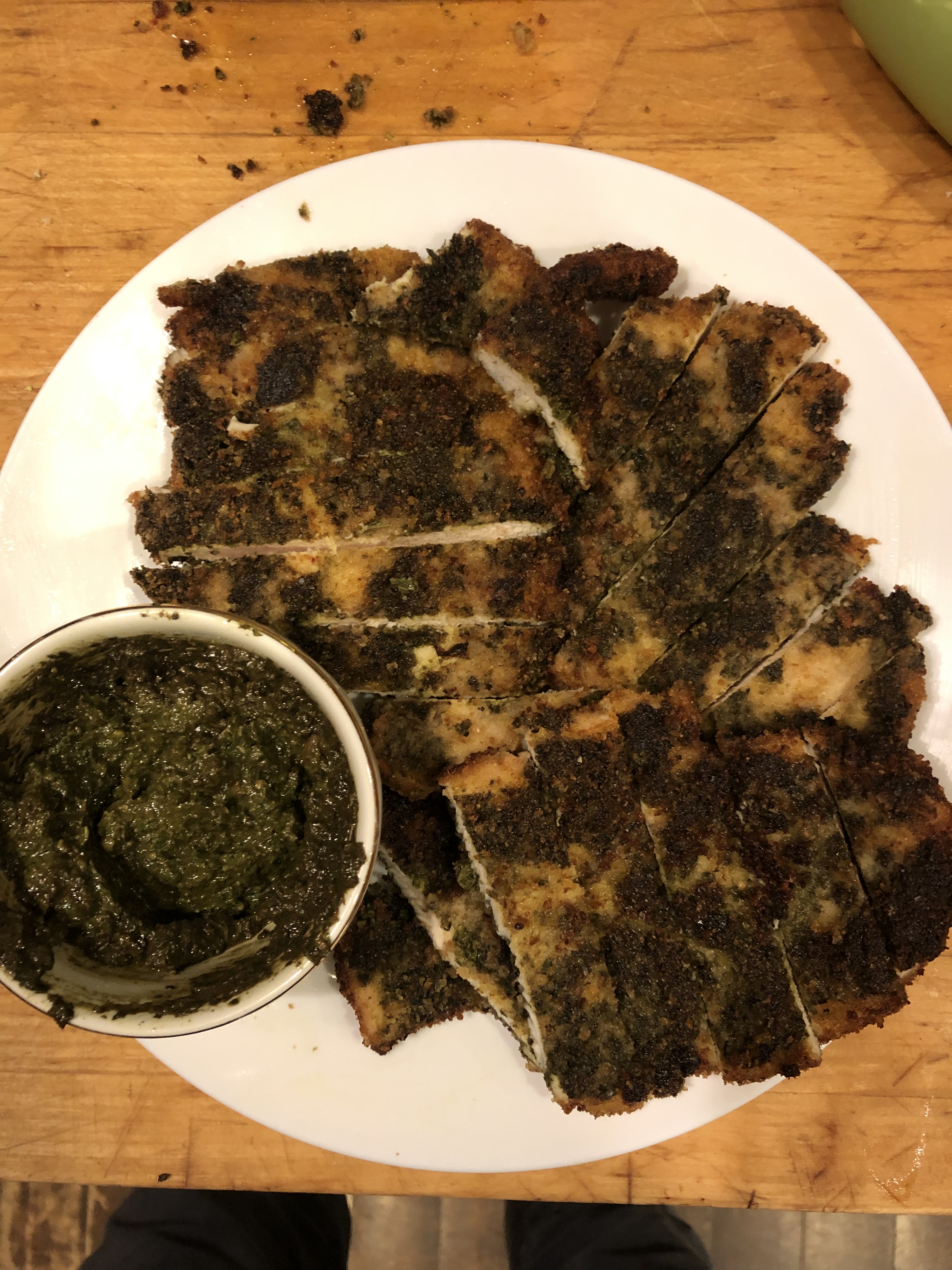
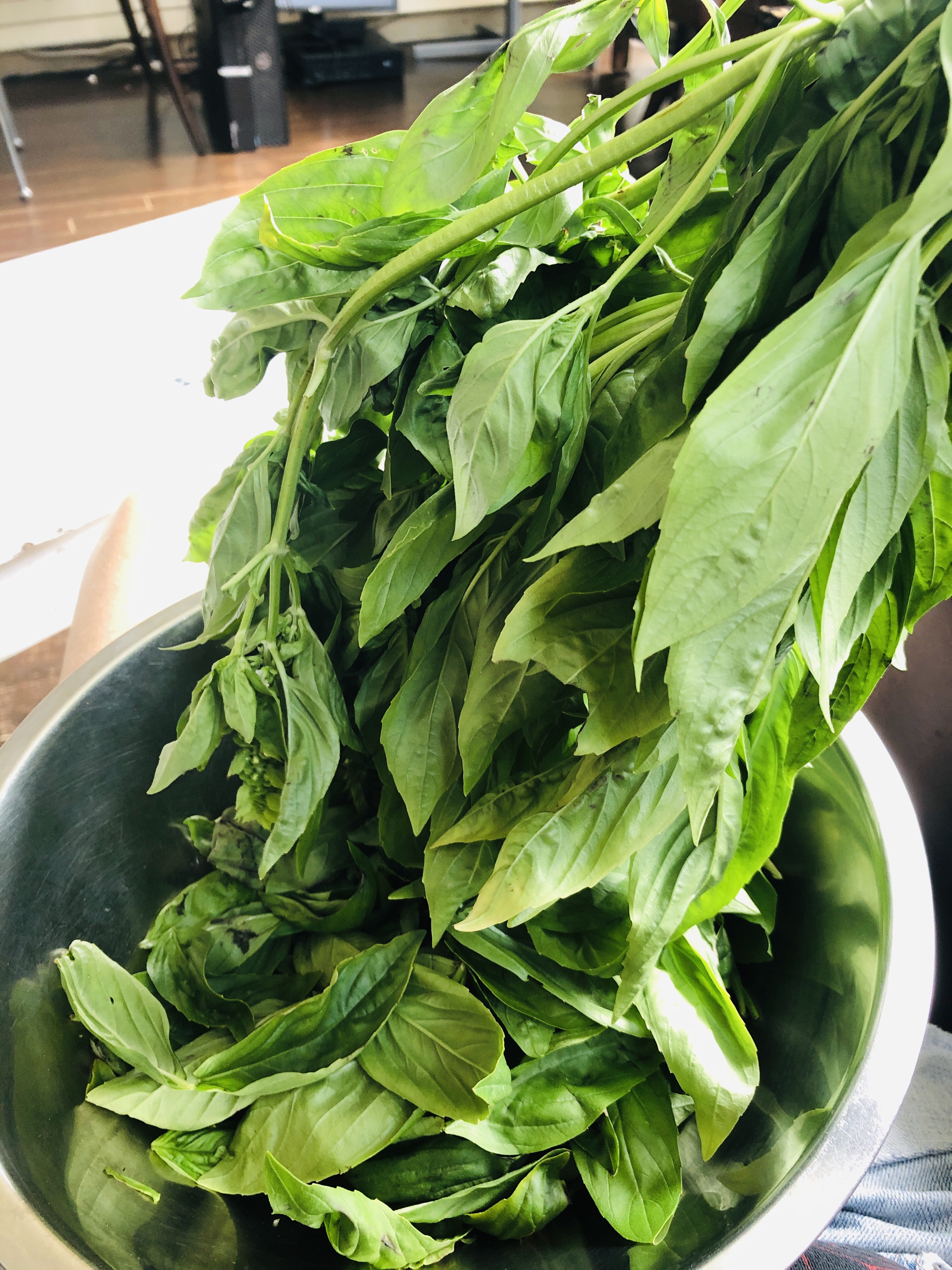
Pesto is one of those staples that I always keep stocked in the fridge. It has the bonus of freezing well so with basil now in season I’ve been making huge batches. It was great to come across this recipe that offers another vehicle for all my pesto other than pasta. The recipe is simple:

Rinse and pat dry chicken breasts and sprinkle both sides with salt and pepper

With a knife spread pesto on one side of the chicken, then dip in bread crumbs. Then spread pesto on the other side and dip in bread crumbs.

Heat a quarter inch of oil in a pan and brown on both sides (about 2 minutes per side). Serve with pesto for dipping.

My pesto is fairly salty so if I were to make this again I would not salt the chicken before adding the pesto, but other than this it was delicious!

I don’t really follow a strict recipe for my pesto but this is a good way to start:

Remove basil leaves from the stem and wash and spin dry well. Wet leaves dilute the sauce.

Put in a food processor with 2-3 cloves of garlic, a half cup of pine nuts, and a half cup of Parmesan.

Slowly add in the oil while processing.

Taste with a little bread and add salt as needed. If the pesto is a little bitter add more nuts and cheese.

Enjoy!